
Will Traditional Real Estate Offices Disappear in 2026? The Future of Real Estate Brokerage Between Digital Transformation and the Human Element
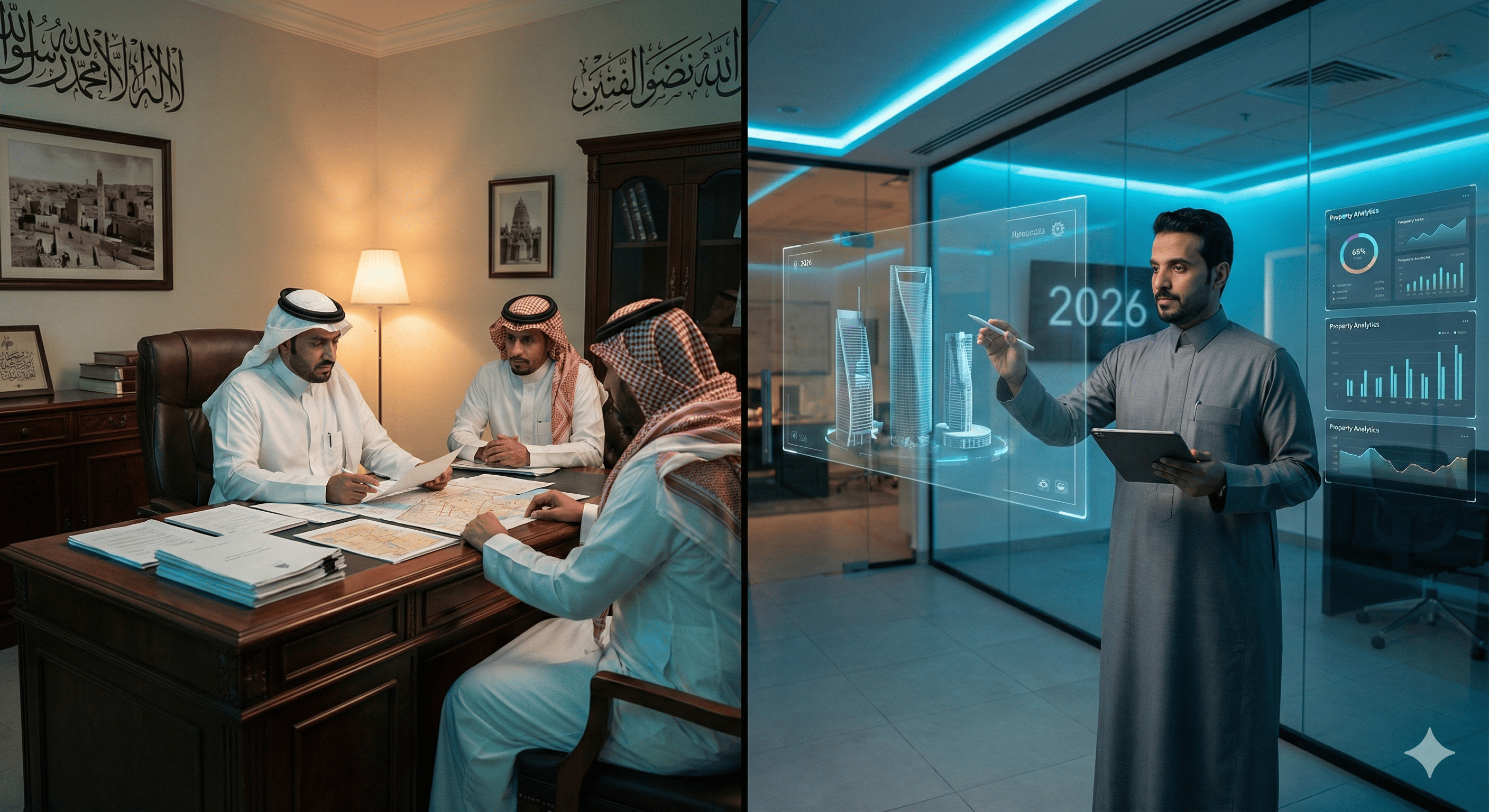
Comprehensive analysis of the future of traditional real estate offices in Saudi Arabia 2026. Will they disappear with digital apps and platforms? Studies, statistics, and realistic predictions about digital transformation and the hybrid model combining technology and human expertise. Discover why real estate agents are here to stay and how their role will evolve.
Introduction: A Question on Everyone's Mind
Not so long ago, buying property was a journey that began and ended at the real estate office door. You'd walk in, sit with an agent, browse through paper files, schedule a viewing, and return again to complete the deal. Everything happened face-to-face, and every step required a visit.
Today, things are completely different. You open your phone, browse hundreds of properties, watch virtual tours, compare prices, read reviews, and even communicate directly with the seller... all before leaving your couch. This rapid transformation raises an important question: Will traditional real estate offices disappear? Is the real estate agent a thing of the past? Will digital apps and platforms replace everything?
The answer isn't as simple as it might seem. In this comprehensive article, we'll take you on a deep journey to understand the future of real estate offices, backed by real studies and statistics from the Saudi and global markets. We'll discover together why the answer isn't "yes, they'll disappear" nor "no, they'll stay the same," but something far more complex and exciting.
First: The Current Reality of Real Estate Offices in Saudi Arabia
The Numbers Speak
Before we talk about the future, let's understand the present. In the Kingdom of Saudi Arabia in 2026, we have:
Over 15,000 licensed real estate agents working in the market, officially registered with the General Authority of Real Estate. This number alone tells you that the sector is still alive and thriving. Thousands of offices are spread across Riyadh, Jeddah, Makkah, Dammam, and every city and town in the Kingdom.
The real estate market size in Saudi Arabia exceeded 500 billion riyals annually and is expected to reach 8.8% of GDP by 2030. This is a massive market that needs brokers and professionals.
Digital platforms like Aqar, Haraj, Dubizzle, and Raghdan (our leading platform!) receive millions of visits monthly. But - and this is interesting - the majority of these platforms rely on real estate agents to post offers and communicate with clients.
What Has Actually Changed?
The change wasn't in the "disappearance" of offices, but in "how they operate." Let me explain:
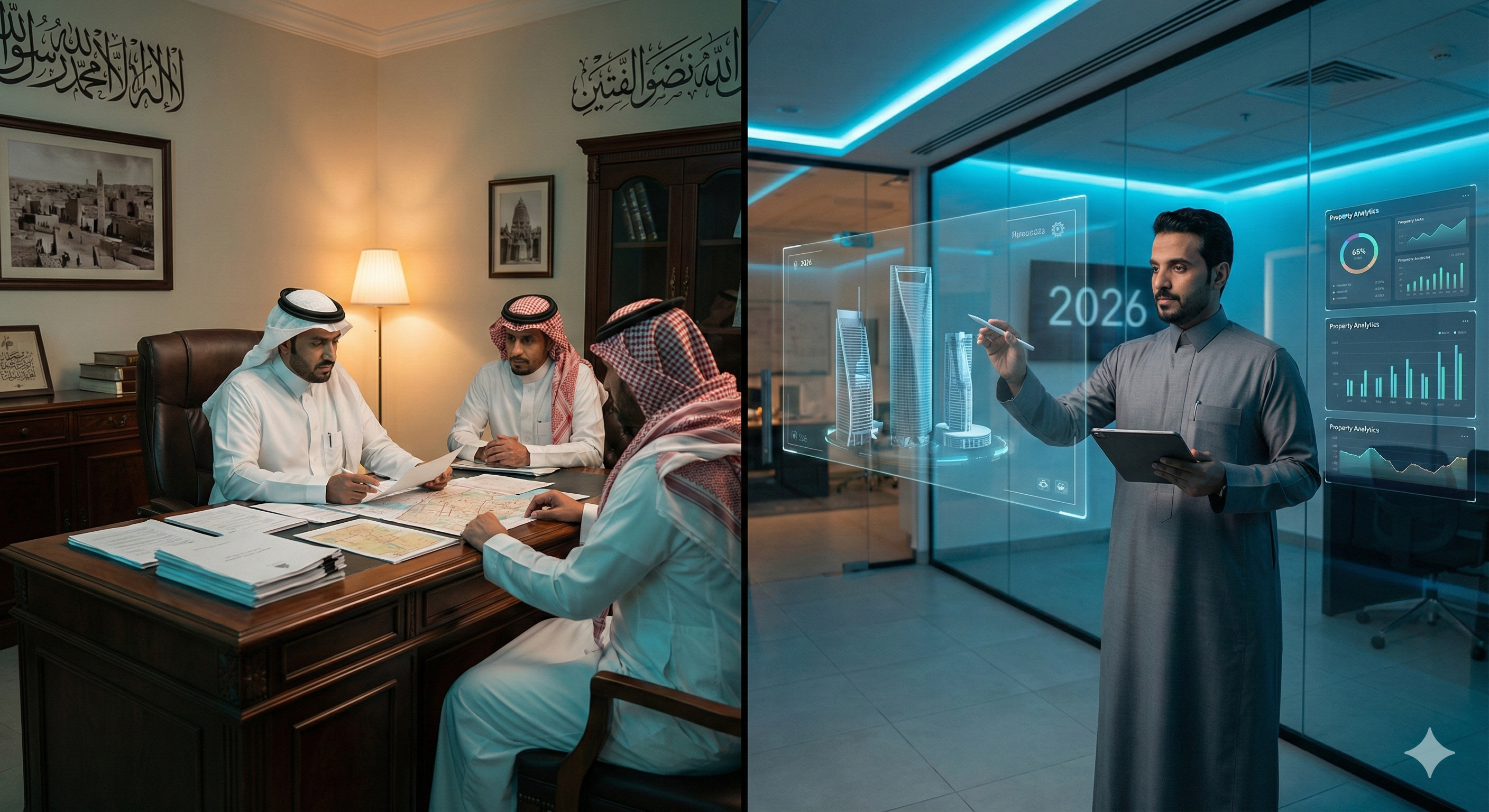
Before digital transformation: The real estate office was the only gateway to information. Want to know what's for sale? You had to visit the office. Want details about a property? You had to call the agent. Information was monopolized, and access was limited.
After digital transformation: Information became available to everyone. You can search, compare, and filter as you wish. But - and this is important - information alone isn't enough. You need expertise, advice, negotiation, market knowledge, developer relationships, understanding of legal papers... and here comes the role of the modern agent.
Second: Digital Transformation - A Revolution in the Real Estate Sector
What Does "Digital Transformation" Mean?
Digital transformation in real estate isn't just "creating a website." It's a complete reimagining of how the sector operates. Let's see the tools and technologies that changed the game:
1. Real Estate Platforms and Apps
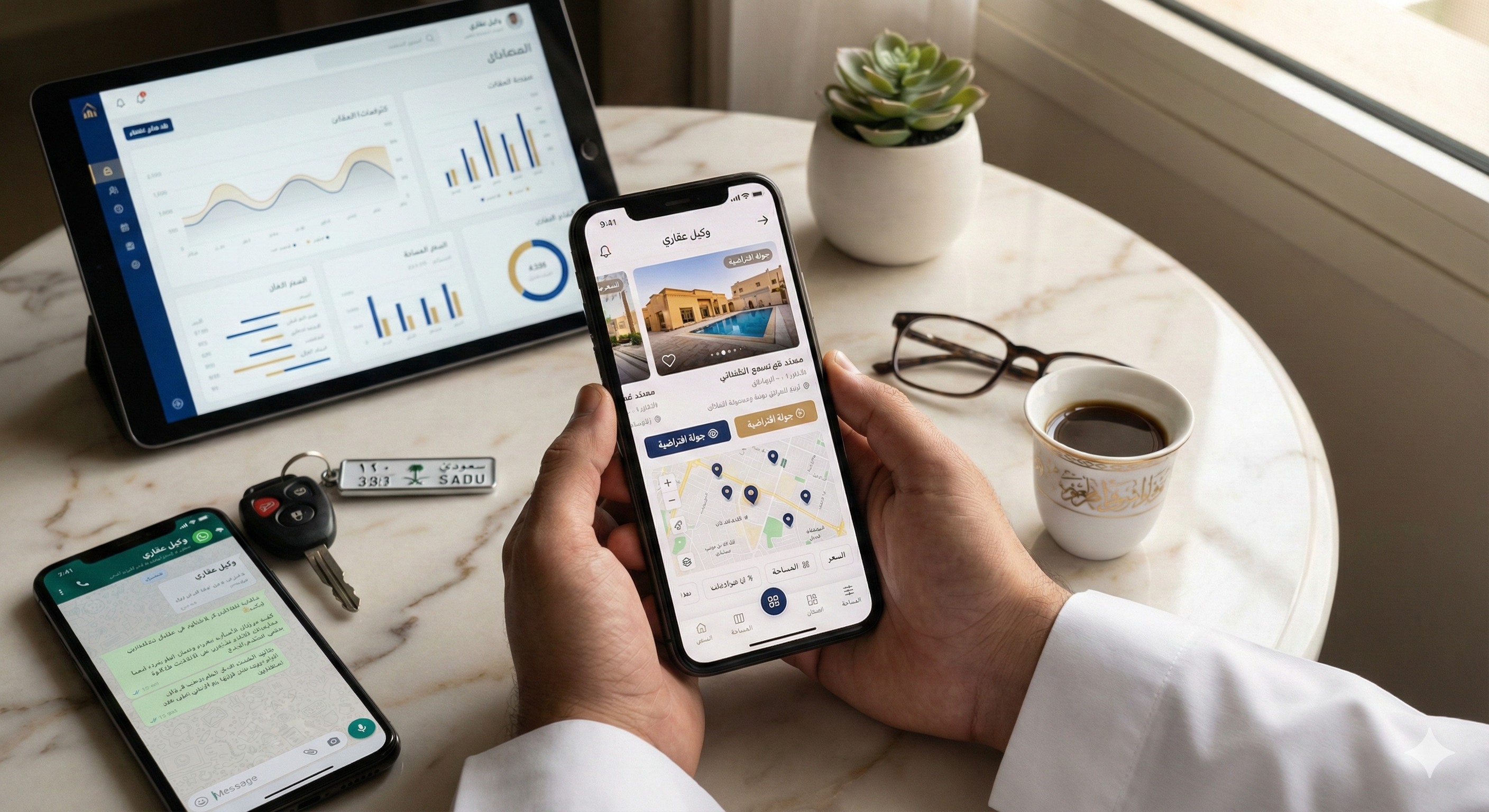
In Saudi Arabia alone, we have dozens of specialized platforms: Raghdan, Aqar Map, Haraj, Dubizzle, Sakani, and others. These platforms offer:
Massive property database (thousands of properties in one place). Interactive maps showing exact location and surrounding services. Advanced search filters (price, area, bedrooms, neighborhood, property type). High-quality images, videos, and 360° virtual tours. Direct communication with owner or agent via WhatsApp, calls, messages.
Important Statistic: According to a 2025 study, 97% of property seekers in Saudi Arabia start their search online. Yes, 97%! This huge number confirms that digital transformation is real and effective.
2. Artificial Intelligence (AI) and Big Data
Artificial intelligence has entered the real estate sector strongly. How?
Automatic property valuation: Algorithms analyze thousands of previous transactions and estimate your property price with high accuracy in seconds. Personalized recommendations: Like Netflix but for real estate! The app learns what you like and suggests properties that suit you. Smart chatbots: Answer your questions 24/7 without waiting. "What's this property's price?" "Does it accept negotiation?" "When can I view it?" Predictive market analysis: Predicts price increases or decreases in certain areas based on data analysis.
Real example: Global platforms like Zillow in America use AI to value millions of properties daily. In Saudi Arabia, platforms like Aqar Map use similar technologies.
3. Virtual Reality (VR) and Augmented Reality (AR)
Imagine viewing an apartment in Riyadh while sitting in Jeddah! This is virtual reality.
360° virtual tours: Walk through the property, open doors, see the balcony view, all from your phone. Augmented Reality: Film an empty room with your phone camera and add virtual furniture to see how it would look furnished.
This was necessary during COVID-19 and continued as a popular service. It saved everyone time and effort.
4. Blockchain Technology
It may seem complex, but the idea is simple: A secure, transparent electronic record that cannot be tampered with.
In real estate, blockchain is used for: Securely documenting ownership that cannot be forged. Smart rental contracts that execute automatically (e.g., automatic rent transfer monthly). Speeding up transactions and reducing unnecessary intermediaries.
In Saudi Arabia: The Real Estate Authority is studying blockchain applications for documenting contracts and preserving rights.
5. Internet of Things (IoT) and Smart Buildings
Modern properties have become "smart." What does that mean?
Control systems for lighting and AC via phone. Surveillance cameras and smart locks. Smart meters monitoring electricity and water consumption and sending reports. Fire and leak sensors sending immediate alerts.
These technologies raise property value and make it more attractive.
Third: Statistics and Studies - What Do the Numbers Say?
Let's look at real data from the Saudi and global markets:
From the Saudi Market:
Digital transformation growth: According to a 2025 Real Estate Authority report, digital economy growth in the real estate sector is 7% annually. Investment in real estate technologies (PropTech) exceeded one billion riyals in the past three years.
Digital platform usage: 89% of internet users in Saudi Arabia visited at least one real estate platform last year. Average time spent searching for property online: 3-4 weeks before contacting an agent.
But - and this is important: 68% of those who searched online ended up dealing with a real estate agent to complete the deal! This is a crucial number proving that online searching doesn't mean eliminating the agent.
Customer satisfaction: A 2025 study by a consulting firm showed that: 82% of buyers prefer "online search + dealing with agent" over "completely online". Only 11% preferred completing everything online without an agent.
From Global Markets:
United States: According to NAR (National Association of Realtors) 2025 report: 89% of buyers used the internet in their home search. But 87% of them dealt with a real estate agent to complete the purchase. Average agent commission remained stable around 5-6% despite digital transformation.
United Kingdom: A Savills study in 2024 showed: 78% of sellers chose a "hybrid" agent combining strong digital marketing and personal service. Properties marketed digitally + by agent sold 40% faster than those relying on one method only.
What do we conclude from these numbers? Digital transformation is real and powerful, but it didn't eliminate the agent's role. Rather, it changed the nature of their work.
Fourth: Why Real Estate Offices Won't Disappear? The Irreplaceable Human Element
Now we reach the heart of the matter. Despite all the amazing technologies, there are things apps and platforms cannot provide. Let me explain:
1. Expertise and Local Knowledge
The app gives you information. A professional agent gives you wisdom.
Which neighborhood is best for a family with children? What upcoming development projects are in the area? Is this price fair or inflated? What's the developer's reputation? Is the neighborhood safe? Are schools and services nearby?
These questions aren't answered by an algorithm. They need a human who lived in the city, knows the market, has years of experience.
Real example: A client searches for an apartment in Riyadh. The app showed 50 great options. The professional agent said: "This neighborhood has terrible morning traffic, and there's a better nearby neighborhood not showing in search because it has fewer listings." This kind of knowledge is priceless.
2. Negotiation and Deal Closing
Buying property isn't like buying a book from Amazon. This is a big, complex deal requiring negotiation skills.
How do you reduce the price without insulting the seller? How do you handle competing offers? How do you phrase contract terms to protect your interests? What if problems appear during property inspection?
A professional agent knows when to push and when to concede. Knows how to read body language and tone. Knows negotiation strategies learned from years of experience.
Important statistic: An American study showed that sellers who dealt with agents got 5-7% higher prices on average compared to those who sold themselves. Yes, even after deducting commission!
3. Legal Aspects and Complex Paperwork
Real estate contracts aren't simple. There are:
Sales and purchase contract (many clauses to understand). Ownership deed (verifying authenticity and no disputes). Real estate loans (bank terms, interest rates, guarantees). Taxes and fees (VAT, registration fees). Licenses and approvals (especially for commercial properties).
A professional agent has legal knowledge or works with specialized lawyers. Reviews papers, protects you from traps, ensures deal safety.
Real story: A client almost bought an apartment found on an app. Great price, excellent location. Contacted agent "just to confirm." The agent discovered the property had an undisclosed legal dispute! Saved the client from a legal and financial disaster.
4. Trust and Psychological Reassurance
Buying property is a big, scary decision. You're paying hundreds of thousands or millions. You need to trust that everything is correct.
The app doesn't feel your anxiety. A human agent reassures you, answers your questions no matter how "silly," accompanies you in viewings, explains every step.
The psychological factor matters: People prefer dealing with people they trust in big decisions. A good agent builds a relationship, becomes a consultant, a friend.
5. Network and Exclusive Access
Professional agents have a "network." They know:
Real estate developers with exclusive offers. Owners wanting to sell quickly (below market). Serious buyers ready to purchase immediately. Trustworthy contractors, designers, lawyers.
This network is hugely valuable. Sometimes the best properties aren't even advertised, sold through these networks.
Fifth: The Hybrid Model - The Future of Real Estate Brokerage
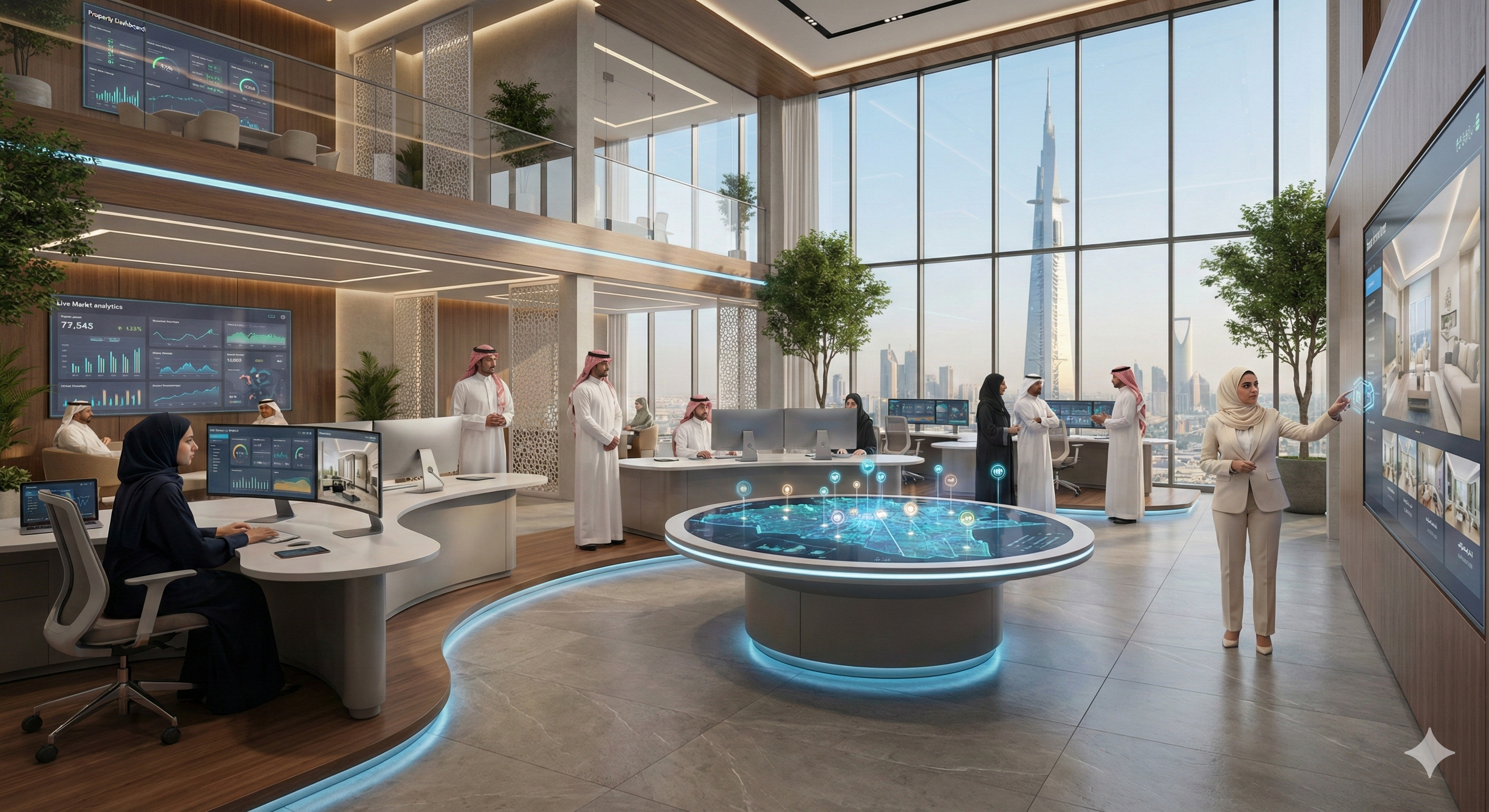
After everything above, the conclusion is clear: The future isn't "digital only" nor "traditional only," but a smart mix of both.
What is the Hybrid Model?
It's a model combining:
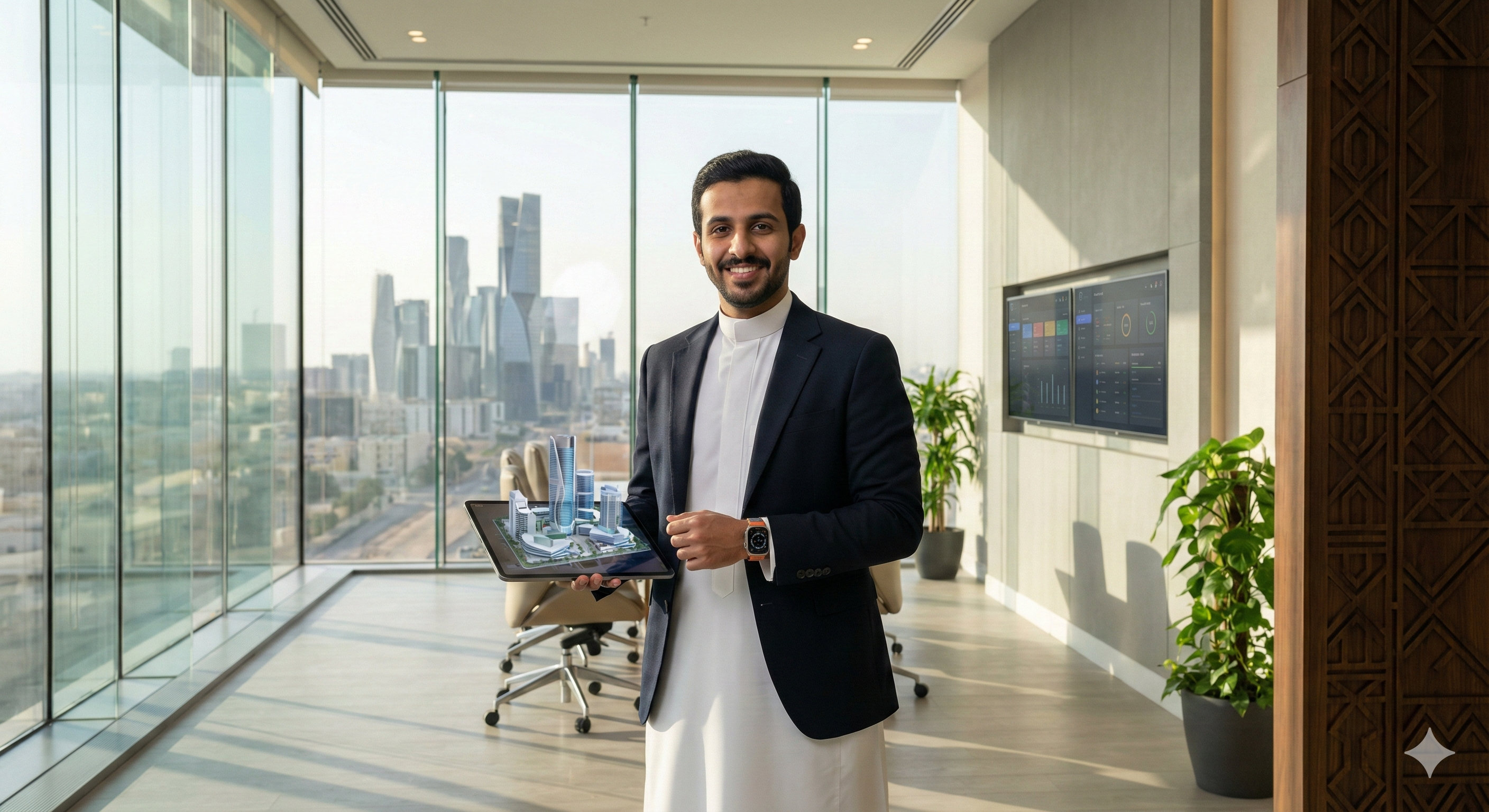
Technology: Digital platforms, apps, artificial intelligence, big data, virtual tours. The human element: Expertise, local knowledge, negotiation, relationships, trust.
The successful hybrid agent in 2026 is one who uses technology to enhance their services, not to replace them.
How Does the Hybrid Agent Work?
1. Digital Search and Marketing:
Posts listings on all platforms (Raghdan, Aqar, Haraj, etc.). Uses social media (Instagram, TikTok, Snapchat) to reach wider audience. Films professional videos and virtual tours. Uses targeted paid ads (Google Ads, Facebook Ads).
2. Data and Analysis:
Uses market analysis tools to accurately estimate prices. Follows trends and predictions. Analyzes customer behavior and understands needs.
3. Personal Service and Follow-up:
Personally accompanies client in viewings. Answers questions and provides personalized advice. Manages negotiation and closing process. Stays in touch even after completing the deal.
4. Fast and Flexible Communication:
Available via WhatsApp, calls, video calls. Responds quickly (usually within minutes). Uses electronic calendar to arrange appointments.
Typical hybrid deal example:
- Client searches on Raghdan platform, finds a property they like.
- Contacts agent via WhatsApp, asks questions.
- Agent sends virtual tour and additional details.
- Client requests viewing. Agent arranges appointment and personally accompanies them.
- Client likes the property. Agent negotiates price and gets a discount.
- Agent reviews legal papers and ensures deal safety.
- Contract signed electronically via "Ejar" or "Aqari" platform.
- Deal completed. Both parties satisfied.
Every step is a mix of technology and human element. This is the future.
Sixth: How Agents and Offices Adapt to the Future?
If you're a real estate agent or own a real estate office, here's a roadmap for survival and success:
1. Master Digital Marketing
This isn't optional. If you're not online, you don't exist.
Learn professional property photography. Master drone photography for aerial views. Use editing software to create attractive videos. Create strong social media accounts. Register on all major platforms and activate your profiles.
Tip: Invest in training courses or hire a digital marketing specialist.
2. Build Personal Brand
In the age of social media, you yourself are a brand.
Share valuable content: tips for buyers, market analyses, success stories. Be transparent and honest. People trust those who seem genuine. Collect positive reviews from clients and display them. Engage with followers, answer questions, be available.
Successful example: Real estate agents on Instagram became "influencers" with tens of thousands of followers. People trust them and deal with them directly.
3. Specialize in a Specific Niche
Instead of being a "general real estate agent," specialize in:
A specific property type (luxury villas, economy apartments, commercial properties, warehouses). A specific geographical area (expert in North Riyadh, or Al Narjis district). A client category (foreign investors, young families, retirees).
Specialization makes you the top expert in your field.
4. Invest in Continuous Education
The sector evolves quickly. You need to keep up.
Attend workshops and conferences (like the annual Future of Real Estate Forum). Get professional certifications (Real Estate Authority offers training programs). Learn about new technologies (AI, VR, Blockchain). Read market reports and studies.
5. Build a Strong Network
Your relationships are your real wealth.
Connect with real estate developers, banks, lawyers, contractors. Join specialized groups and forums. Participate in real estate sector events. Help others, and they'll help you.
6. Use CRM Systems
Customer Relationship Management (CRM) systems are essential.
Organize your customer database. Track transactions and deals. Send automatic reminders and follow-ups. Analyze your performance and improve strategy.
Examples: Salesforce, Zoho CRM, or specialized local systems.

Seventh: Challenges and Opportunities
Challenges Facing Traditional Agents:
1. Intense Competition: The market is crowded. Thousands of agents compete for the same clients.
2. High Customer Expectations: Clients want speed, professionalism, transparency, and excellent service. Any shortcoming and they'll go to a competitor.
3. Cost: Digital marketing, technical tools, training... all need investment.
4. Resistance to Change: Some older agents resist digital transformation. "I've worked my way for 30 years and succeeded!" - This mentality is dangerous.
5. Digital Illiteracy: Not all agents are tech-savvy. They need training.
Golden Opportunities:
1. Huge, Growing Market: Saudi Arabia is witnessing massive real estate growth. Projects worth hundreds of billions. Housing demand is increasing. Endless opportunities.
2. Government Support: Vision 2030 strongly supports the sector. Housing programs, easy financing, white land fees... all activate the market.
3. Technology Facilitates Work: Yes, technology is a challenge, but also an opportunity. Helps you reach more clients, work more efficiently, provide better service.
4. Human Element Always Needed: As we explained, people need agents. If you provide real value, you'll succeed.
5. Specialization and Niche: A big market means room for specializations. Find an uncrowded niche and master it.
Eighth: Successful Global and Local Examples
From Saudi Arabia:
Raghdan Platform: An excellent example of the hybrid model. An advanced digital platform combining technology and professional agents. Over 15,000 licensed agents work through the platform. Comprehensive services: search, communication, virtual tours, contract documentation.
Aqar Map: One of the largest platforms in Saudi Arabia. Gathers millions of listings. Provides market analysis tools. Connects buyers with agents and developers.
From the World:
Zillow (America): A real estate technology giant. Started as a search platform, but didn't eliminate agents. In fact, employed thousands of agents to work with them. The lesson: Technology and humans are stronger together.
Redfin (America): A tech + brokerage company. Full-time agents work there, using the latest technologies. Succeeded because it combined both.
Rightmove (Britain): The largest real estate platform in the UK. Completely depends on agents to post listings. Collaborative, not competitive.
Ninth: Vision 2030 and the Real Estate Sector
We cannot discuss the future of real estate in Saudi Arabia without mentioning Vision 2030. This ambitious vision places the real estate sector at the core of economic and social transformation.
Vision 2030 Goals for the Real Estate Sector:
Raising homeownership rate: From 47% to 70% by 2030. This means millions of new housing units. A golden opportunity for agents.
Developing smart cities: NEOM, Qiddiya, Red Sea, Greater Riyadh... giant projects creating entirely new markets.
Digital transformation: Digitizing all real estate services. "Aqari," "Ejar," "Sakani" platforms... all part of this transformation.
Sector regulation: The General Real Estate Authority works on raising professionalism, consumer protection, developing competencies.
What does this mean for agents? Huge opportunities for those who qualify and professionalize. Challenges for those who resist change. The future is for developed professionals.
Tenth: Frequently Asked Questions
1. Will I be jobless if I'm a real estate agent?
Answer: No! But your work's nature will change. If you develop and adapt, you'll find bigger opportunities than before. If you refuse change, you'll face difficulties.
2. Should I abandon my physical office?
Answer: Not necessarily. The physical office still has value, especially for clients preferring personal meetings. But you must have a strong online presence too.
3. What's the most important skill to learn?
Answer: Digital marketing. If you don't know how to reach clients online, you'll lose the market.
4. How much does digital transformation cost?
Answer: Varies by transformation level. You can start with a small budget (creating platform accounts, filming with your phone) and gradually develop. Invest what you can afford.
5. Will technology completely replace me someday?
Answer: In the foreseeable future (10-20 years), no. The human element in real estate is necessary for emotional, psychological, and practical reasons. Even with AI development, big decisions will need a human.
6. How do I compete with big platforms?
Answer: Don't compete with them, cooperate! Use platforms as tools to expand your reach. Focus on what distinguishes you: personal service, local knowledge, relationships.
Conclusion: The Future is Hybrid, and Opportunity is for Those Who Adapt
After this long journey, let's summarize the answer to the big question: Will traditional real estate offices disappear?
The short answer: No, they won't disappear. But they will transform.
Offices that resist change and refuse development? Yes, these will disappear or face severe difficulties. Offices that embrace technology, develop skills, and provide real value? They'll thrive.
Key Points:
- Digital transformation is an unavoidable reality. 97% of searchers start online. If you're not digitally present, you don't exist.
- The human element is irreplaceable. Expertise, negotiation, trust, local knowledge... things apps can't provide.
- The hybrid model is the future. A mix of technology and human element. Best of both worlds.
- The Saudi market is huge and growing. Vision 2030, giant projects, population growth... all golden opportunities.
- Professionalism and development are keys to success. Invest in yourself, learn, develop, build your brand.
Final Message:
If you're a real estate agent or own an office, don't fear the future. Embrace it. Technology isn't your enemy, but your ally. Use it to become the best version of yourself.
If you're a buyer or seller, know you're fortunate. You now have more options than ever. You can easily search online and get personal help from a professional agent. Best of both worlds.
The future isn't "either/or." The future is "and." Technology and humanity. Digital platforms and professional agents. Speed and wisdom. This is the future we deserve.
Welcome to the age of hybrid real estate. An age combining the power of technology and the warmth of humanity. An age that doesn't exclude anyone, but embraces everyone.
Real estate offices won't disappear. They'll evolve. And that's much better.