
Property for Living vs. Rental Investment: One Decision That Will Change Your Life Forever in 2026
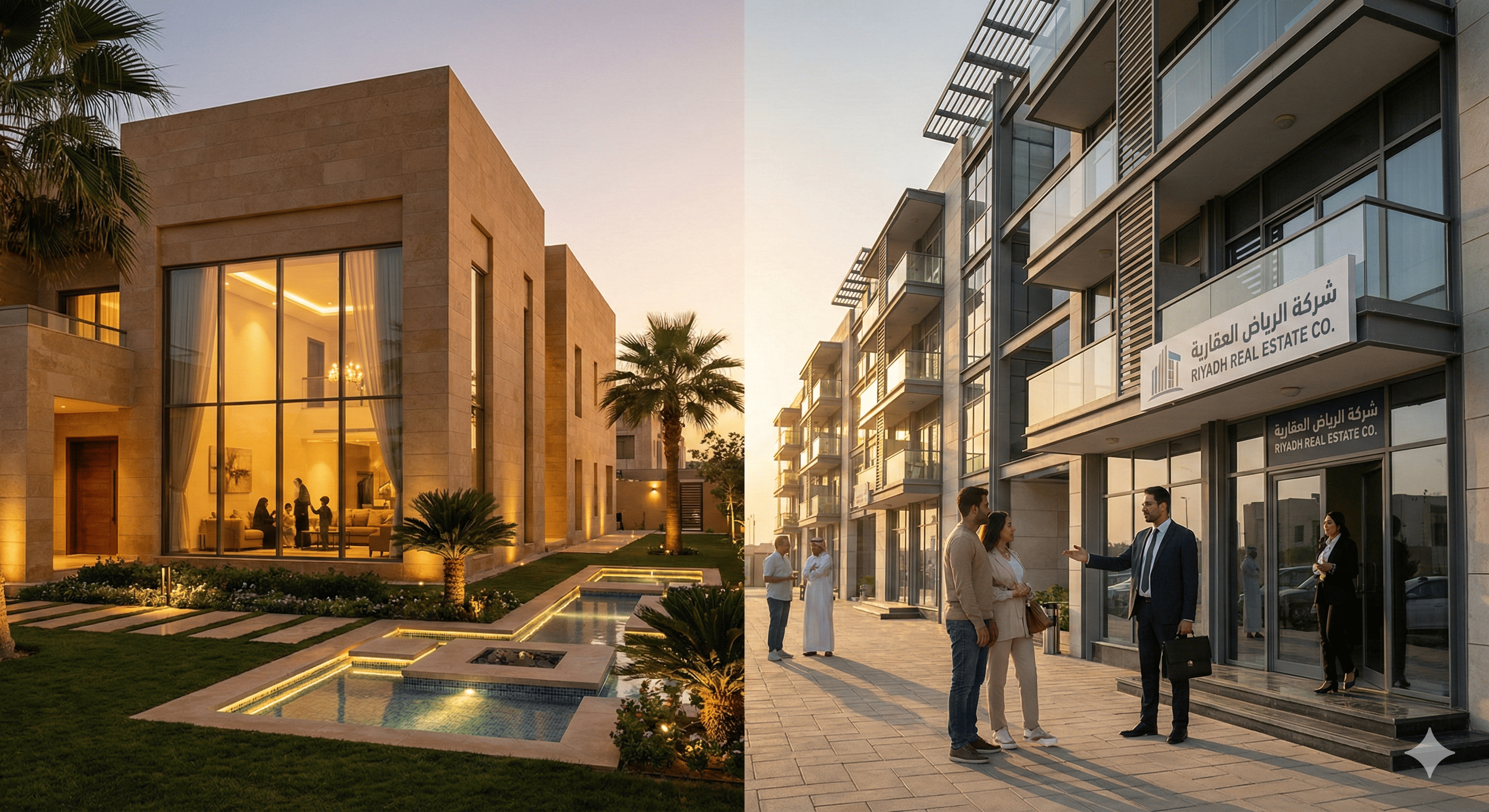
Comprehensive guide to help you make life's most important decision: Should you buy property for personal residence or rental investment? Learn the fundamental differences in specifications, finishes, décor, financial returns, and the right criteria for choosing in the Saudi market 2026
Introduction: The Decision That Will Define Your Financial Future
Imagine standing at a crossroads. On one path, your dream home where you and your family will live, designed to your taste, every corner telling your story. On the other path, an investment property generating steady monthly income, quietly building your wealth, securing your financial future.
This isn't just a casual real estate question. This decision will determine your financial trajectory for at least the next decade. It could be the difference between financial stability and constant pressure. Between building real wealth or merely owning a static asset. Between financial freedom or being tied to one location.
In 2026, with massive developments in the Saudi real estate market and Vision 2030 revolutionizing the property sector, this decision has become more complex... and more important. The options available today didn't exist 5 years ago. Investment opportunities are multiplying. New regulations have opened previously closed doors.
But let me be honest with you: there's no single right answer for everyone. The decision depends on many factors: your age, income, goals, family situation, financial aspirations, and even your personality.
This article won't give you a ready answer. Instead, it will provide all the information you need to make the right decision yourself. We'll delve into every small detail: specifications, finishes, décor, costs, returns, risks, and opportunities. In the end, you'll be able to make a confident, informed decision that suits your specific situation.
Prepare for a long, detailed journey. Get your coffee, take your time reading. Because this decision deserves every minute of your attention.
First: The Fundamental Difference Between Residential Property and Rental Property
Before diving into technical details, let's understand the basic philosophy behind each type. The difference isn't just about "who will live in the property," but everything: thinking approach, selection criteria, design, and ultimate goal.
Personal Residential Property: Your Lifetime Home
Personal residential property is where you and your family will live. This isn't just a real estate asset; it's "your home." The place where you'll create lifetime memories. Where your children will grow up. Where you'll spend time with loved ones. Where you'll feel secure and stable.
Therefore, personal residential property is built on a completely different foundation:
Priority One: Comfort and Happiness - You choose the location you love, even if it's not the best investment. You might pay more for a beautiful view, proximity to your children's school, or a quiet neighborhood that matches your personality.
Priority Two: Design According to Your Taste - Every detail reflects your personality and taste. From wall colors to flooring types. From kitchen design to bedroom décor. You're not looking for "finishes that please everyone," but finishes that make you happy.
Priority Three: Long-term Quality - You're not buying to sell after 3 years. You're building to live 10, 20, or even 30 years. Therefore, you invest in high-quality materials, luxurious finishes, and modern systems that will serve you for decades.
Rental Investment Property: Income-Generating Machine
Rental property is primarily a "business project." Its main goal: generating financial returns. Every decision is based on precise financial calculations: how much will I pay? How much will I earn? When will I recover capital?
Therefore, rental property is built on completely different foundations:
Priority One: Return on Investment (ROI) - You choose the location with highest rental demand, not the location you "love." You might buy in a neighborhood you wouldn't personally want to live in, but it achieves 9% annual return.
Priority Two: Cost vs. Return - Every riyal spent on finishes must increase rental value. No room for luxuries or personal touches. Finishes must be "practical, attractive, and durable" at the lowest possible cost.
Priority Three: Easy Management and Maintenance - You're looking for a self-managing property. Finishes that don't need constant maintenance. Durable materials that withstand tenant changes. Simple design that doesn't create problems.
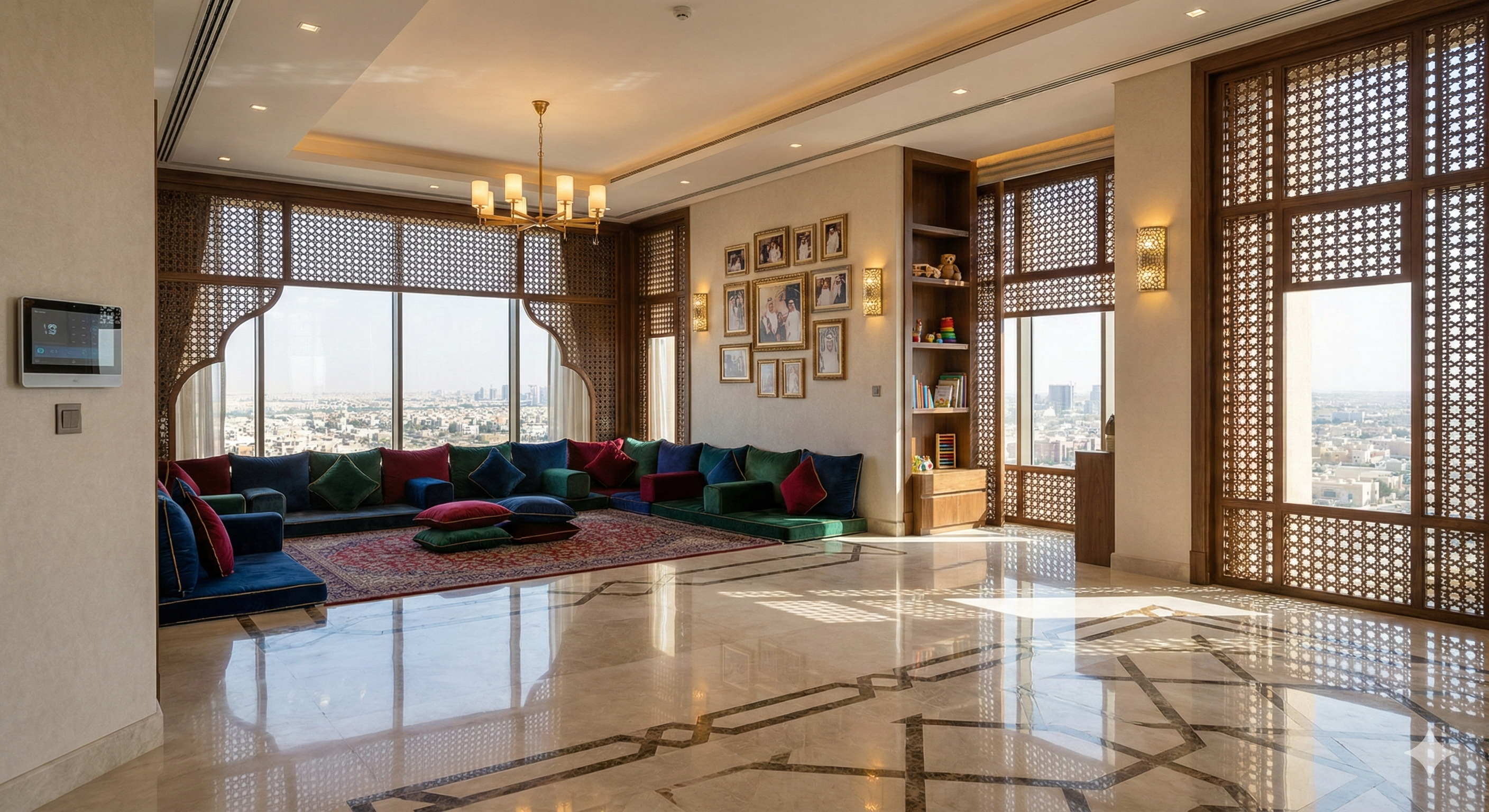
Second: Personal Residential Property - Complete Details
Now let's delve into every aspect of personal residential property. We'll discuss specifications, finishes, décor, costs, advantages, and disadvantages in precise detail.
Ideal Specifications for Personal Residential Property
Location: Choose a location that serves your daily life. Proximity to work saves hours of your day. Proximity to children's schools gives them more sleep time. A quiet neighborhood protects you from city noise. Neighbors of the same social level create a comfortable environment.
Size: Calculate wisely. Don't buy smaller than your current needs, nor much larger than your future needs. A young family with two children might need 200-250 square meters. A large family might need 300-400 meters. Remember: every extra meter means higher purchase cost, and more maintenance and electricity expenses.
Architectural Design: Choose a design that suits your lifestyle. A family that loves hosting needs spacious men's and women's majlis. A modern family might prefer open spaces. A conservative family needs clear separation between public and private areas.
Number of Rooms: Golden rule: number of family members + an extra room for guests or office. A family of 4? Choose at least 3 bedrooms. Plan for the future: you might need an extra room for a new baby, or for your elderly parents.
View: Don't underestimate a beautiful view's value. Waking up every day to a beautiful sight improves your mood and psychology. A view of a garden, mountain, or even a quiet street is better than a view of a wall or parking lot.
Finishes: From Basic to Luxurious
Finishes are the soul of the property. Let's explain each level in boring detail:
1. Unfinished (Bare Bones / Red Brick)
This means receiving the property after the structural frame is complete only. What you get: red brick walls, concrete columns, ceilings, and main doors only. No electricity, no plumbing, no flooring, no paint. Literally just the structure.
When is it suitable? If you want 100% complete control over every detail. If you have a large budget and want very luxurious custom finishes. If you're patient and ready to wait 6-12 months until finishing is complete.
Additional Cost: Expect to add 30-50% of purchase price for complete finishing.
2. Semi-Finished (Plastered)
You receive the property after basic work is completed: electricity and plumbing extensions inside walls, wall plastering (first cement layer), door and window frames installed. But without: flooring, paint, interior doors, kitchen, or equipped bathrooms.
When is it suitable? If you want a balance between control and speed. If your budget is moderate and you want to save 15-20% of complete finishing cost. If you're ready to wait 3-6 months.
Additional Cost: Expect to add 20-35% of purchase price.
3. Fully Finished (Commercial)
You receive the property ready to move in immediately. Includes: wall and ceiling paint, regular ceramic or porcelain flooring, simple wooden doors, aluminum windows, basic kitchen, bathrooms equipped with regular ceramics and standard sanitary fixtures, complete electricity and plumbing.
But beware: Materials are usually medium or lower quality. Called "commercial finishing" because it uses the cheapest acceptable materials. Ceramics might be third grade, regular paint, doors from cheap compressed wood.
When is it suitable? If your budget is limited and you need immediate housing. If you're planning to refinish after years. If you're currently renting and want to save rent quickly.
Cost: Usually adds 10-15% to unfinished property price.
4. Lux Finishing
Here we start entering the world of real quality. Includes everything in complete finishing, but with much better materials: First-grade Spanish or Italian porcelain ceramics, High-quality paint (like Jotun or Dulux), Natural wood or excellent MDF doors, Double-glazed aluminum windows for insulation, Kitchen with good cabinets and natural marble surface, Bathrooms with luxurious ceramics and brand-name sanitary fixtures.
When is it suitable? If this is your permanent home for coming years. If you appreciate quality and durability. If your budget is good and you want real value for money.
Additional Cost: Expect 25-40% increase over commercial finishing.
5. Super Lux Finishing
We elevate another level. Everything becomes more elegant: Natural marble or authentic wooden parquet flooring, Gypsum board with elegant ceiling designs with hidden LED lighting, Natural Arau or oak wood doors, UPVC or thermal aluminum windows with insulating glass, Custom-designed kitchen with built-in appliances (oven, hood, built-in), Bathrooms with modern designs, marble in walls and floors, luxurious sanitary fixtures (Grohe, Hansgrohe), Decorative lighting in every room, Special paints (Venetian plaster, metallic paints).
When is it suitable? If you're building your "lifetime home" that will witness your life's most important moments. If you have refined taste and appreciate aesthetic details. If your budget is excellent.
Additional Cost: Expect 50-70% increase over commercial finishing.
6. Ultra Lux Finishing
Luxury begins here. Not just luxurious materials, but custom designs: Luxurious Italian marble (Calacatta, Statuario) in floors and walls, Premium wooden parquet (Teak, Walnut) protected with special layers, Gypsum board with complex architectural designs with smart RGB lighting, Custom-designed doors from rare wood, Smart electric windows with reflective or colored glass, Designer kitchen with marble island and Premium appliances (Miele, Bosch), Bathrooms with luxurious hotel designs, jacuzzi, rain shower, marble everywhere, Hidden central air conditioning system (VRF), Complete smart home (control lighting, AC, curtains via phone).
When is it suitable? If you're from the very wealthy class. If you're looking for 7-star hotel level in your home. If money is not an obstacle.
Additional Cost: Expect 100-150% increase over commercial finishing, or more.
7. De Luxe Finishing - The Absolute Peak
This isn't finishing; it's a masterpiece. Everything is custom-designed, nothing is "ready-made": Rare marble specially imported for you, perhaps from exclusive quarries, Wood from protected forests with special permits, hand-treated, Ceilings with three-dimensional artistic designs, perhaps hand-carved plaster panels, Hand-carved doors by specialized craftsmen, Windows with colored or engraved glass with exclusive designs, Kitchen designed by specialized architect, every piece unique, Spa-like luxurious bathrooms, carved marble sinks, gold-plated faucets, Home cinema with professional sound insulation, Luxurious internal elevator, Integrated security system with hidden cameras and fingerprint.
When is it suitable? If you're among major wealthy or royal families. If the home represents your social status. If budget is "open."
Cost: The sky is the limit. Might exceed 200-300% of basic property price.
Décor and Interior Design
Finishing is the "body," but décor is the "soul." Let's explore your options:
Classic Décor: Traditional luxury, golden warm colors, massive luxurious furniture, crystal chandeliers, patterns and decorations, heavy curtains. Suitable for: conservative families, seniors, traditional luxury lovers.
Modern Décor: Clean simple lines, neutral colors (white, gray, beige), simple practical furniture, hidden lighting, open spaces. Suitable for: youth, modern families, simplicity lovers.
Neoclassic Décor: Mix between classic and modern, luxury without exaggeration, warm colors with modern touches, elegant practical furniture. Suitable for: most tastes, ideal balance.
Islamic/Arabic Décor: Islamic decorations, wooden mashrabiya, arches, Arabic calligraphy, heritage colors. Suitable for: heritage preservers, authentic Arabic style lovers.
Scandinavian Décor: Absolute simplicity, very light colors, natural wood, plants, strong natural lighting. Suitable for: nature and simplicity lovers, mental health conscious.
Real Costs of Personal Residential Property
Let's be realistic and calculate everything:
Initial Purchase Cost: Property price + registration fees (free in Saudi Arabia) + brokerage fees (usually 2.5% of price) + valuation fees.
Finishing Cost: According to chosen level (explained above).
Furniture Cost: Don't underestimate it! Good furniture for a 200-meter property might cost 80,000 - 150,000 riyals.
Fixed Monthly Costs: Electricity (500-1500 riyals depending on size and usage), Water (100-300 riyals), Internet (200-400 riyals), Regular maintenance (AC, plumbing, electricity - divide 5,000 riyals annually by 12 months).
Annual Costs: Home insurance (optional, about 2,000-5,000 riyals), Major maintenance (painting, repairs - about 5,000-15,000 riyals every 3-5 years).
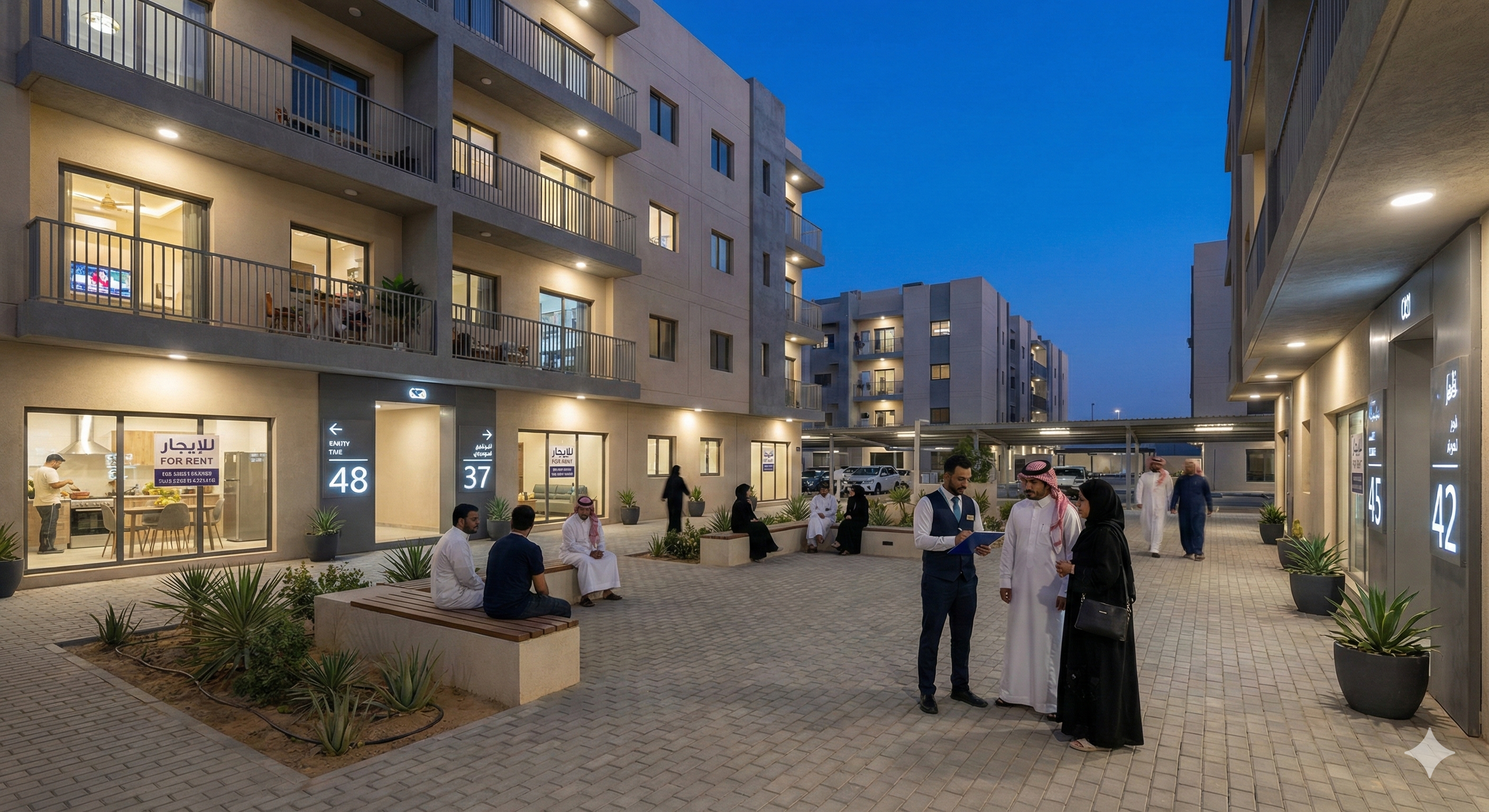
Third: Rental Investment Property - All Details
Now let's delve into the world of real estate investment. Rental property isn't a home; it's a "business project" aimed at generating steady monthly income and building long-term wealth.
Ideal Specifications for Rental Property
Strategic Location: Look for high rental demand, not "beautiful place." Best locations: near universities (students), near major hospitals (medical staff), near companies and factories (employees), middle-class popular neighborhoods (limited-income families), near airport (pilots and flight attendants).
Required Size: Smaller is better! A 100-150-meter apartment rents faster than a 400-meter villa. Why? More potential tenants. Lower rent = faster occupancy.
Number of Rooms: Golden rule for rental: 2-3 bedrooms. This is what most tenants want (young couples, small families, roommates).
Design: Simple, practical, and neutral. No wasted spaces, no strange or custom designs. Every meter must be usable.
Ideal Finishes for Rental
Here the philosophy differs 180 degrees from personal residence:
Rule One: Cost vs. Return
Every riyal spent on finishing must increase rental value. Example: If you spend 50,000 riyals extra on luxurious marble, will rent increase 400 riyals monthly (to recover cost in 10 years)? If not, there's no need!
Rule Two: Durability Over Luxury
The tenant won't care for the property like you. Choose durable materials that withstand poor use: First-grade porcelain flooring (durable and relatively cheap), Washable good-quality paint (not luxurious, but endures), Moisture-resistant MDF doors, Good but not luxurious sanitary fixtures (Jaquar, American Standard).
Rule Three: Always Neutral
Wall colors: white, beige, light gray. No strange or bold colors. You want the property to please 90% of tenants, not just 10%.
Best Finishing Level for Rental?
Answer: Complete Finishing + (Plus) - i.e., complete finishing but with slightly better materials than "commercial." Invest in: Good porcelain flooring (not luxurious, but not cheap), Good washable paint, Good MDF doors, Bathrooms with good ceramics and reasonable sanitary fixtures, Kitchen with durable cabinets and granite or Corian surface (not natural marble).
Ideal Cost: About 15-20% increase over basic commercial finishing.
Why not go for Lux or Super Lux finishing? Because tenants won't pay rent equal to the difference! An apartment with regular finishing rents for 20,000 riyals annually. Same apartment with Super Lux finishing might rent for only 24,000 riyals. You spent 60,000 extra riyals on finishing, but it increased only 4,000 riyals annually! You need 15 years to recover the cost. This is a bad investment.
Types of Rental: Choose the Most Suitable
1. Annual (Long-term) Rental
One-year renewable lease contract. Advantages: Complete stability, guaranteed fixed income, One client = easy management, Lower maintenance costs (client cares more about property). Disadvantages: Relatively lower return, Can't easily increase rent during contract, If tenant doesn't pay, legal procedures are long.
When suitable? If you don't want daily management burden. If you prefer stability over higher return. If property is far from you and you can't manage it daily.
2. Monthly Rental
Monthly renewable or cancellable lease contract. Advantages: 20-30% higher return than annual, More flexibility (can sell property easily), Can quickly increase rent with market. Disadvantages: Instability (tenant might suddenly leave), More management (contracts, keys, continuous maintenance), Higher costs (repainting, cleaning between tenants).
When suitable? If property is close to you and you can manage it. If you're looking for higher return. If you're ready to bear some troubles.
3. Daily (Hotel) Rental
Renting the unit daily or weekly (like Airbnb). Advantages: Much higher return! Might reach 50-80% more than annual, High occupancy in tourist seasons, You control daily price according to demand. Disadvantages: Very intensive management (reception, cleaning, daily maintenance), High operating costs (electricity, water, internet, cleaning), Fast property consumption (needs renovation every 2-3 years), Some areas or neighborhoods might prohibit it.
When suitable? If you're available or have a property manager. If property is in excellent tourist or commercial location. If you're looking for maximum possible return.
Return on Investment (ROI) - Real Calculations
Let's be realistic and calculate everything:
Annual Gross Return in Saudi Arabia (2026)
Residential Properties: Riyadh: 6-8%, Jeddah: 6-7%, Dammam and Khobar: 7-9%, Makkah and Madinah (seasonal): 8-12%.
Commercial Properties: Shops: 8-12%, Offices: 7-10%, Warehouses: 9-11%.
Realistic Calculation Example: Bought an apartment in Riyadh for 600,000 riyals. Suitable finishing cost: 90,000 riyals. Total investment: 690,000 riyals. Expected annual rent: 48,000 riyals (4,000 monthly). Gross return = (48,000 / 690,000) × 100 = 6.95%.
But wait! This isn't net return. Deduct annual costs: Maintenance and repairs: 5,000 riyals, Vacancy periods (one empty month): 4,000 riyals, Management (if through agency): 2,400 riyals (5% of rent).
Total costs: 11,400 riyals. Annual net income = 48,000 - 11,400 = 36,600 riyals. Net return = (36,600 / 690,000) × 100 = 5.3%.
Is 5.3% a good return? Compare with alternatives: Savings account in bank: 2-3%, Sukuk and bonds: 4-5%, Stocks (with risks): 8-12% but not guaranteed.
Property gives you 5.3% + property value appreciation over years (usually 2-4% annually). Total return = 7-9% annually. This is very good!
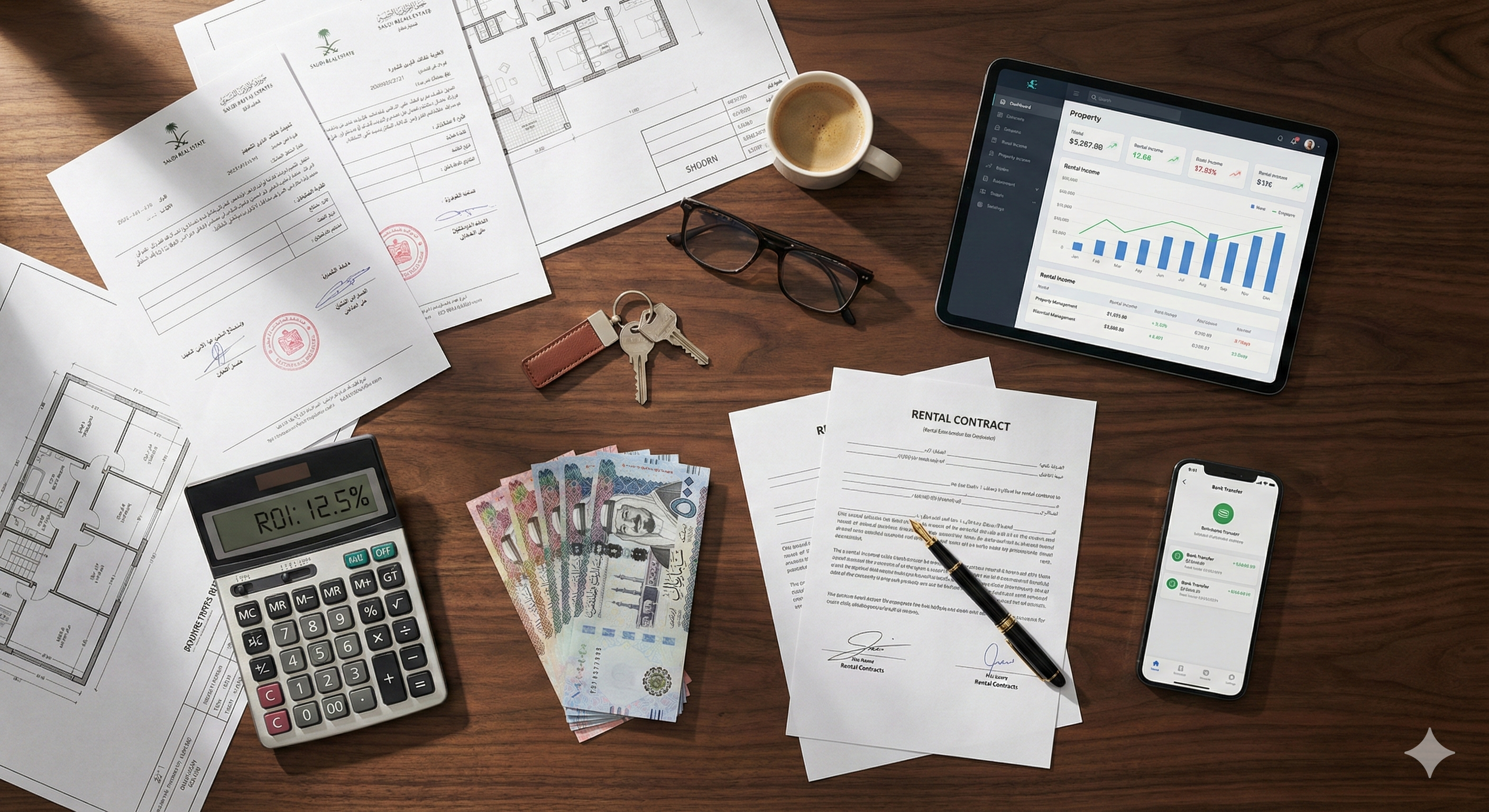
Fourth: Comprehensive Detailed Comparison
Now let's put everything side by side in a clear comparison:
1. Purpose and Goal
Residential Property: Psychological comfort, stability, creating memories, sense of ownership and security. Non-financial return (peace of mind, saving rent).
Rental Property: Generating passive income, building wealth, achieving financial freedom. Direct measurable financial return.
2. Location Selection Criteria
Residential Property: Proximity to work and schools, neighborhood safety and quietness, neighbor quality, services (mosques, shopping centers, parks), view and environment.
Rental Property: High rental demand, proximity to universities/hospitals/companies, easy transportation, stable neighborhoods (neither too upscale nor too poor), area's historical occupancy rate.
3. Size and Design
Residential Property: According to your actual and future needs, design suits your lifestyle, private spaces (office, playroom), garden or yard if possible.
Rental Property: Smaller is better (faster rental), standard design suits everyone, no wasted spaces, 2-3 bedrooms ideal.
4. Finishes and Quality
Residential Property: From Lux to De Luxe according to your budget, high quality lasting 15-30 years, according to your personal taste, luxuries welcome (jacuzzi, smart home).
Rental Property: Complete finishing + (slightly better than commercial), durability over luxury, completely neutral, no unnecessary luxuries.
5. Décor and Colors
Residential Property: According to your personal taste, bold colors if you like, custom décor, personal paintings and antiques.
Rental Property: Neutral colors (white, beige, gray), simple practical décor, nothing personal or strange.
6. Total Cost
Residential Property: Purchase price + luxurious finishing (30-100% additional) + furniture (80,000-200,000 riyals) + high monthly costs (electricity, water, maintenance).
Rental Property: Purchase price + practical finishing (15-20% additional) + simple furniture or without + monthly costs usually borne by tenant.
7. Financial Return
Residential Property: No direct income, saving rent (indirect value), property value appreciation over years, psychological comfort (non-financial value).
Rental Property: Fixed monthly income (5-9% annually), property value appreciation (2-4% annually), total return 7-12% annually depending on management.
8. Maintenance and Management
Residential Property: You're responsible for everything, regular maintenance with your personal care, full costs you bear.
Rental Property: Tenant bears most simple maintenance, you bear only major maintenance, you can delegate management agency (for 5-10% of rent).
9. Flexibility and Liquidity
Residential Property: Difficult to sell quickly (emotional attachment), if you want to move you need sell and buy (long process), might have to sell at loss if you need quick liquidity.
Rental Property: Easier to sell (no emotional attachment), can sell while property is rented (advantage for buyer), option to sell anytime without affecting your life.
10. Risks
Residential Property: Risk of market value decrease, risk of property damage (fire, flood), no mandatory insurance (recommended).
Rental Property: Risk of non-occupancy (months without rent), risk of bad tenants (vandalism, non-payment), risk of market change (rent decrease), most can be insured against.
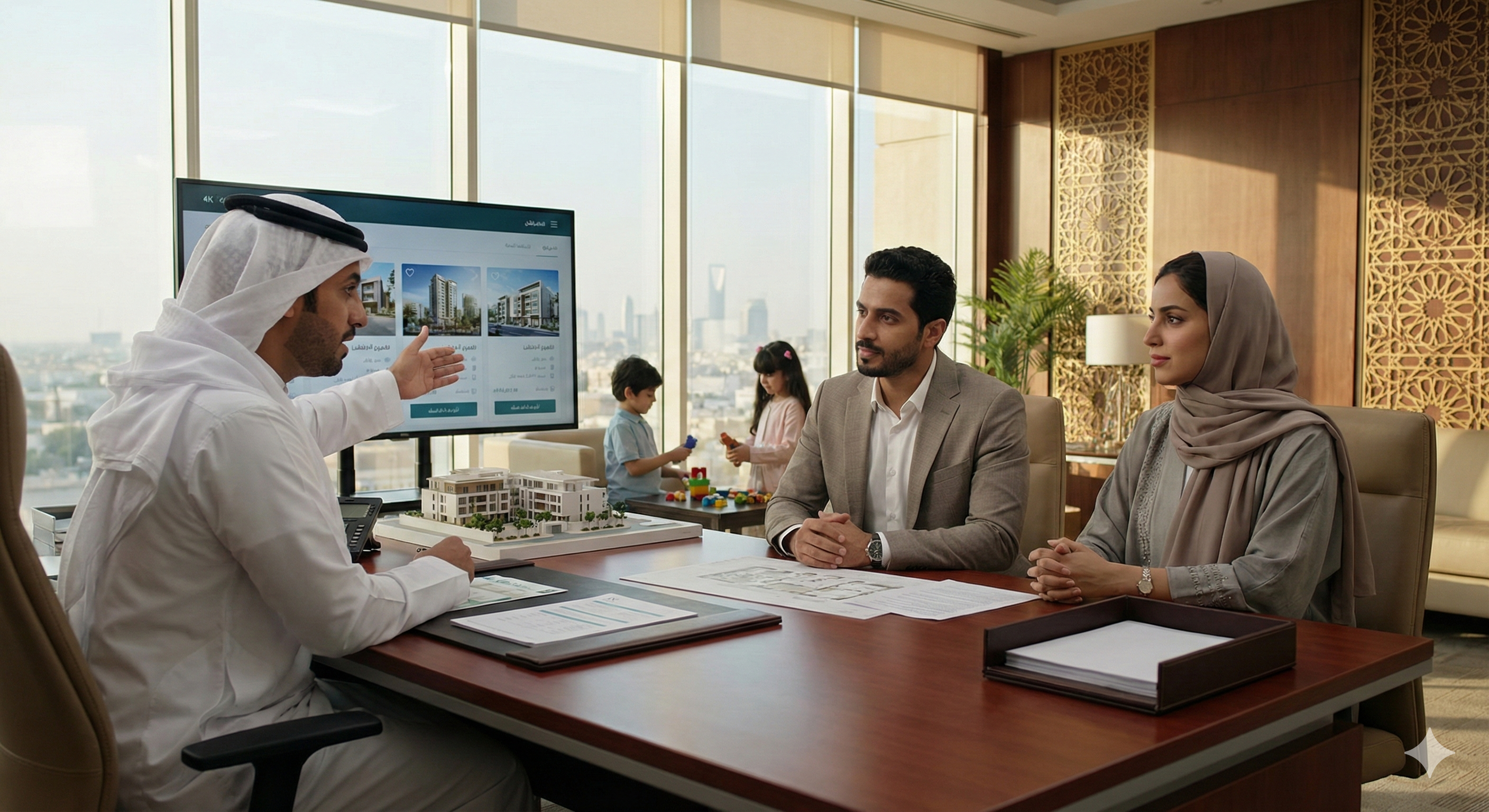
Fifth: How to Make the Right Decision? Clear Criteria
Now we've reached the most important part: how do you know what suits you? Here's a clear methodology:
Criterion One: Your Age and Life Stage
In Your Twenties (23-29 years): Rental investment is usually better. Why? Because you're still exploring your life. You might move for work to another city. You might get married and need a bigger property. Investment gives you flexibility and extra income.
In Your Thirties (30-39 years): Here confusion begins. If you're married and stable: personal residence might be a priority. If you're financially ambitious: start with rental and continue renting temporarily. Smart solution: Buy a rental property first, then after 3-5 years buy personal residence.
In Your Forties (40-49 years): Personal residence becomes a priority. Your children are growing, you need stability. But if you've built a rental property portfolio, excellent! Keep it as extra income.
Over Fifty: If you don't own personal residence yet, buy it now. Stability at this age is more important than financial return.
Criterion Two: Your Monthly Income
Modest Income (less than 10,000 riyals): Focus on personal residence with mortgage. Rental needs extra capital that might not be available.
Medium Income (10,000-20,000 riyals): You have options. If you're currently renting at 2,000 monthly, buying personal residence with 2,500 monthly installment might be logical. Or buy a small rental property that pays you 1,500 monthly.
Good Income (20,000-40,000 riyals): Ideal solution: buy personal residence for your comfort + at least one rental property for investment.
Excellent Income (over 40,000 riyals): Build a diversified property portfolio: luxurious personal residence + several rental properties.
Criterion Three: Your Financial Goal
Your Goal: Safety and Stability → Choose personal residence. It will give you peace of mind and no worry about rent increases.
Your Goal: Building Wealth and Financial Freedom → Choose rental. Every rental property = additional income source bringing you closer to financial freedom.
Your Goal: Early Retirement → Invest heavily in rental properties. Calculate: 5 rental properties with 2,000 riyals rent = 10,000 monthly. Enough for retirement!
Criterion Four: Your Experience Level
Complete Beginner: Start with personal residence. Less complex, less risk, you learn real estate market gradually.
Medium Experience: Try rental cautiously. Start with one small apartment, learn from experience.
Expert or Have Trusted Advisor: Build diversified portfolio confidently.
Criterion Five: Your Family Situation
Single: Rental is better. More flexibility, fewer commitments, early wealth building.
Newly Married Without Children: Don't rush personal residence. Rent a small apartment, invest in rental. After 3-5 years and with first child, buy personal residence.
Married With Small Children: Personal residence is a priority. Stability is important for children (schools, friends, stable environment).
Married With Older Children (Teenagers): If you don't own residence yet, buy it now definitely. If you already own, think about investment.
Ideal Scenario: Combining Both
The smart solution isn't "either/or," but "both gradually." Here's the plan:
Phase 1 (Twenties and Early Thirties): Rent a small apartment with reasonable rent (1,500-2,500 riyals). Save what you can. Buy a small rental property (apartment for 400,000-600,000 riyals). Let it generate income and appreciate in value.
Phase 2 (Mid-Thirties): Buy a second rental property. Now you have two passive incomes + value appreciation. Continue renting (might seem strange, but it's smart!).
Phase 3 (Late Thirties / Early Forties): Time for personal residence! Now you have: Larger capital (from property value appreciation), Passive income helping pay installment, Experience in real estate market.
Buy your dream home. Keep rental properties (lifetime extra income).
Result at Fifty: Comfortable personal residence paid or nearly paid + 2-3 rental properties generating 5,000-8,000 riyals monthly + real estate wealth worth millions.
Sixth: Golden Tips for Each Type
Tips for Personal Residence Buyers
Don't Rush: Search for at least 3-6 months. Compare dozens of options. The home is a 20-30 year decision, don't rush it.
Buy in Upscale Neighborhood with Modest Property, Not Modest Neighborhood with Upscale Property: Neighborhood raises value more than finishing.
Think Future: Your family will grow, you might need home office, parents might live with you. Buy slightly larger than current needs.
Don't Spend All Budget on Purchase: Keep 15-20% for emergencies, furniture, and initial improvements.
Invest in Basic Quality: Good insulation, excellent plumbing, safe electricity. These aren't seen, but they're most important.
Tips for Rental Property Buyers
Location, Location, Location: 80% of investment success. Modest property in excellent location better than luxurious property in bad location.
Calculate Return Before Purchase: Use formula: (Annual Rent / Total Cost) × 100. If less than 5%, look for another option.
Think as Tenant, Not Owner: What will attract tenant? Parking? Elevator? Near services? This raises rent.
Start Small: Don't buy a million riyal villa as first investment. Start with 500,000 apartment. Learn, then expand.
Calculate Vacancy Cost: Assume one or two months vacancy annually (between tenants). Include in calculations.
Clear Written Contract: Use electronic documented "Ejar" contract. Protects you legally.
Property Insurance: Against fire, floods, disasters. Cost is simple (2,000-5,000 annually), but saves you from million losses.
Seventh: Fatal Mistakes to Avoid
Residential Property Mistakes
Mistake One: Emotional Purchase Without Calculations: "I loved the house so I bought it!" Then discovered installment eats 60% of income. Calculate before buying!
Mistake Two: Excessive Finishing: Spending 400,000 riyals on luxurious finishing for 800,000 property. Now you have 1.2 million property in area where highest price is 900,000. Loss!
Mistake Three: Buying on City Outskirts: "Price is cheap!" But you spend 3 hours daily on road. Your life is more valuable than money saved.
Mistake Four: Neglecting Pre-Purchase Inspection: Discovered after purchase: water leaks, cracks, electrical problems. Repair cost 80,000 riyals!
Rental Property Mistakes
Mistake One: Buying Based on Feelings: "The area is quiet and beautiful!" But no one wants to rent there. Look for actual demand, not beauty.
Mistake Two: Neglecting Hidden Costs Calculation: Calculated only purchase price and finishing. Forgot: vacancy periods, maintenance, management, taxes. Return dropped from 8% to 4%!
Mistake Three: Accepting Any Tenant: Needed rent quickly, so accepted first person. After 3 months: payment delays, vandalism, legal problems. Choose your tenant carefully!
Mistake Four: Not Documenting Contract: Verbal or undocumented paper contract. Tenant refused to vacate, case lasted two years!
Mistake Five: Investing in One Area: Bought 3 properties in same neighborhood. Neighborhood declined economically, lost 30% of value in all properties! Diversify areas.
Eighth: Frequently Asked Questions
Can I buy property for residence then rent it later?
Yes, very possible! Many buy personal residence, then after years move to bigger residence and rent the old one. But beware: luxurious personal finishing might not raise rent by same cost. You'll get slightly higher rent only.
What's the best neighborhood for rental in Riyadh?
According to tenant type: For families: Al-Narjis, Al-Yasmin, Al-Olaya. For single employees: Al-Sulaymaniyah, Al-Aqiq, Al-Malaz. For students: University District, Al-Mursalat. For limited-income families: Al-Shafa, Al-Rawdah, Al-Badiah.
How much capital do I need to start real estate investment?
Minimum: 150,000-200,000 riyals (30% down payment for 500,000-600,000 property + finishing and registration costs). Ideal: 300,000-400,000 riyals (for better property without large loans).
Is daily rental better than annual?
Financially: Yes, 50-80% higher return. Practically: No, much more tiring. Choose daily only if: You're available or have manager, Property in excellent tourist/commercial location, Ready to bear tiredness for return.
How do I deal with non-paying tenant?
Don't be lenient! Follow these steps: Friendly verbal warning, Written notice (via notary or electronic Ejar), File eviction lawsuit via Najez platform, Execute eviction judgment (might take 2-6 months). To avoid problem: Choose tenant carefully, request guarantee (check or guarantor), document everything.
Should I buy property cash or with loan?
For personal residence: Mortgage is acceptable and logical (with low interest 3-5%). For rental: If ROI is higher than loan interest, loan is smart. Example: Rental return 7%, loan interest 4%. Your net profit 3%. But ensure ability to pay installments even if property is vacant two months.
What if property prices decrease?
For residential property: Don't worry, you don't plan to sell. Temporary decrease doesn't affect you. For rental property: Rents are usually more stable than prices. Property value might decrease 10%, but rent decreases 2% only. Continue earning income, value will rise again after years.
Conclusion: Your Decision Starts Now
We've reached the end of this detailed guide. Now you have all the information. Let me conclude with final advice:
There's no "wrong" decision. Personal residence gives you stability and peace of mind. Rental gives you income and financial growth. Both are correct decisions, provided they're based on study, not emotion or rush.
Best: Don't choose just one. Ideal plan is: rent initially, invest in rental, then buy personal residence. Thus you combine stability and wealth together.
Start now, even with small step. Don't wait for "perfect time." Don't wait for "sufficient" budget. Start with what you have. Small apartment, modest property, anything. Every property you buy today will be thanked after 10 years.
Consult experts, but decide yourself. Listen to real estate advisor, financial advisor, experienced friend. But ultimately, you live with the decision. Choose what suits your life, goals, and dreams.
The decision might seem confusing now. But trust me: after years, you'll look back and be proud you made a studied decision that changed your life for the better. Whether it's your dream home where you wake up every morning smiling, or rental properties giving you financial freedom to live your dream life.
The decision is in your hands. The future awaits you. Start now. 🏡✨